Products

 Products Overview
Newsela products are purpose-built to unlock student motivation, inspire teachers, and drive long-lasting learning outcomes.









Resources
About
Products OverviewNewsela products are purpose-built to unlock student motivation, inspire teachers, and drive long-lasting learning outcomes.

When you pose the question “What is Women’s History Month?” in class, you’re really inviting students to examine how we shape history, whose stories are recorded, and how societies change over time.
In social studies, Women’s History Month gives you a structured opportunity to explore historical roles, leadership, innovation, and civic preparation as an essential part of world and U.S. history studies.
With Newsela Social Studies, you can help students investigate these questions using accessible articles, videos, and primary sources to build background knowledge and historical thinking skills.
Jump to:
Key takeaways:
Women’s History Month social studies lessons are most effective when students see how individuals responded to the circumstances of their time. Exploring qualities such as resourcefulness, leadership, innovation, courage, and strength helps students understand how historical conditions shaped decision-making and opportunities.
Women throughout history often adapted to limited resources and shifting expectations. They found creative ways to support their families, communities, and economies. Studying these examples helps students understand how necessity can influence innovation.
Teach a lesson with resources that explore how:

Women have played key roles in science, math, and exploration, even if they didn’t get recognition at the time. Examining these contributions helps students understand how knowledge develops over time. Explore great minds like those of:
Trailblazing women often worked within, and sometimes beyond, the boundaries of their time. Studying their leadership helps students understand power, influence, and civic participation. Introduce students to:

Courage often appears during periods of conflict or instability. Studying these moments helps students evaluate risk, choice, and consequence in historical decision-making. You can share stories about how:
Strength has taken many forms over time. Exploring the lives of women in athletics helps students see how definitions of physical and emotional strength evolve. With Newsela Social Studies resources, you can:
Key takeaways:
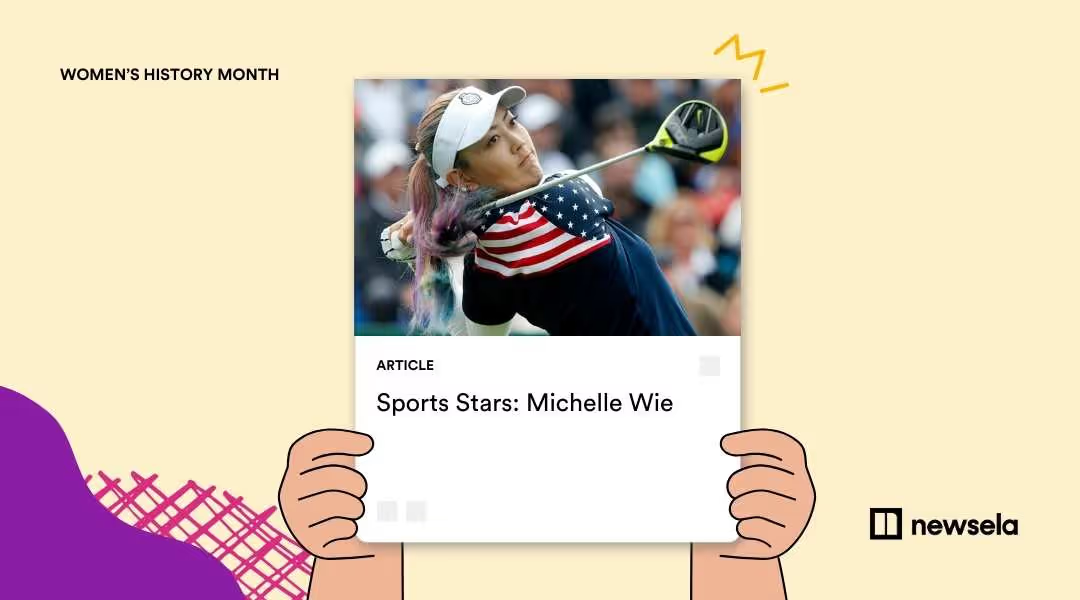
Learning about accomplished women across regions and time periods helps students connect individual achievement to larger historical trends. These stories support discussions about access, opportunity, and leadership. Introduce students to women like:
Some women’s influence is immediate. Others become recognized over time. Studying long-term impact helps students think about legacy and how we determine historical significance. Explore lasting contributions from figures like:
You can extend the lesson by asking students to interview an inspirational woman in their own lives and introduce the Telling HERStory writing project.

Hispanic women have shaped journalism, labor movements, and political discourse across the Americas. These examples help students examine leadership in different civic spaces. Introduce them to:
Studying societies with women leaders challenges assumptions about governance and authority. It also helps students compare leadership structures across civilizations. Dive into ancient Egyptian society with the following lesson:
Key takeaways:
Students can trace how women’s roles in American history changed over time while also showing continuity across experiences. By examining different eras, students can better understand how social, political, and economic conditions shaped women’s daily lives.

Women contributed to the Revolutionary cause through writing, organizational work, and leadership. Studying their roles expands students’ understanding of how the colonists won the war. Learn about little-known legacies with resources like:
In the early republic, women influenced social norms, family structures, and civic values. These lessons help students examine how informal roles shaped national identity. Dive more deeply into this time period and:
%20Black%20woman%20to%20serve%20in%20U.S.%20Army.avif)
The Civil War reshaped daily life for women across regions. Studying these experiences helps students compare perspectives and understand how war affects societies beyond the battlefield. Lessons can support primary source analysis and regional comparison. Students can explore firsthand accounts that revealed women’s Civil War roles, like:
Women played essential organizational and leadership roles that sustained reform efforts over time. Studying their contributions to the Civil Rights Movement helps students understand how organized groups operate.
Use Newsela resources to:

Women participate in government at the local, state, and national levels. Studying modern participation helps students connect historical trends to present-day governance. Support civic literacy and representation analysis with Newsela resources on:
Key takeaways:
Understanding voting rights and civic participation is central to answering the question “What is Women’s History Month?” Students can examine how laws, movements, and public participation evolved over time.
Women gained the constitutional right to vote when the 19th Amendment was ratified in 1920. Studying this milestone helps students understand how legal change happens. Support constitutional analysis and historic causation with resources like:
.avif)
Voting rights were one step in many coordinated efforts to expand women’s participation and opportunities in society. Tracing these movements helps students understand how reform evolves. Support chronological reasoning and thematic continuity with Newsela Social Studies resources, like:
Feminism influenced social norms, workplace expectations, and legislation throughout the 20th century. Studying its evolution helps students connect social ideas to policy outcomes. Explore the unit that focuses on topics like:
Key takeaways:
Do you want to extend or supplement your Women’s History Month lessons without redesigning instruction? Choose from resources that are easy to plug into existing units.

Primary sources let students engage directly with historical voices and events. Analyzing these sources strengthens historical inquiry and evidence evaluation. Use the following resources to provide authentic documents for student exploration:
Videos help students visualize historical contexts and reinforce key ideas. They’re especially useful for introducing or summarizing complex topics. You can use Newsela videos to look more deeply into concepts like:
We hope these resources make it easier to help you develop relevant, engaging lessons about women’s history in your class this March. For even more great content from Newsela Social Studies and our other great subject products, sign up for Newsela Lite to start your free 45-day trial of all our premium content and activities.


Explore ready-to-use women’s history month lesson plans for ELA that help students analyze texts, poetry, history, and women’s voices.

Discover how to celebrate Women’s History Month in your science classes with a collection of resources to teach about inspiring, trailblazing scientists.

Explore a collection of Women’s History Month books with strong female characters, paired with Newsela resources to support classroom reading.