Products

 Products Overview
Newsela products are purpose-built to unlock student motivation, inspire teachers, and drive long-lasting learning outcomes.









Resources
About
Products OverviewNewsela products are purpose-built to unlock student motivation, inspire teachers, and drive long-lasting learning outcomes.

Women’s History Month is a great time to connect science learning to the real world, especially when students can see women actively shaping STEM today.
By creating lessons on current events and living scientists, you help students understand that science isn’t just historical, but it’s ongoing, relevant, and inclusive. Our Newsela STEM resources make it easier to build background knowledge, spark discussion, and anchor science in authentic contexts.
Jump to:
Key takeaways:
Women are leading groundbreaking research, solving global problems, and using science to improve lives right now. When you highlight women scientists making the news, you reinforce that STEM careers are accessible, evolving, and deeply connected to issues students care about.
Show students how women are changing the face of science, technology, engineering, and math (STEM) through current events and real-world problem solving:
Key takeaways:
Women’s History Month is also an opportunity to help you expand students’ understanding of how science has evolved across disciplines. By exploring women’s contributions in space science, computer science, and other STEM fields, you can help them recognize patterns of innovation, perseverance, and representation.

Computer science is one of the fastest-growing STEM fields, and women are actively reshaping it. Exploring women’s computer science stories allows you to address equity and representation while helping students understand how access influences who participates in STEM careers.
Help students learn how the STEM fields are becoming more inclusive for women by exploring articles on topics like:
From early space programs to modern research on human health in orbit, women have played key roles in expanding our knowledge of space. Teaching these stories helps students understand that space exploration depends on diverse expertise, from engineering and biology to design and problem-solving.
Help students learn about the women braving the final frontier with articles on topics like:
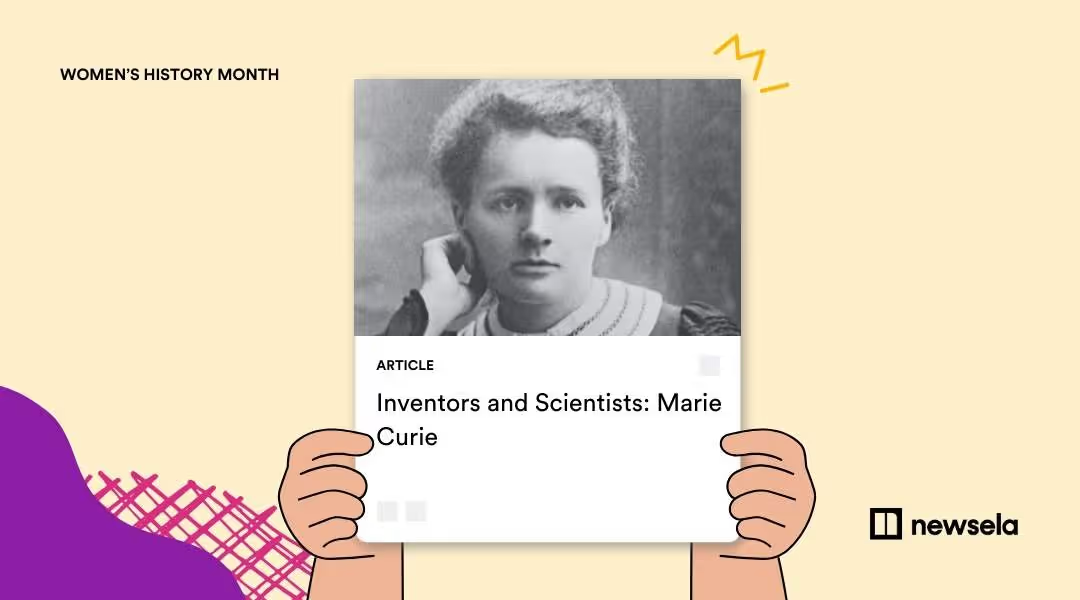
Women have made foundational contributions across nearly every scientific discipline. Teaching about these pioneers helps students connect modern science to its historical roots. It also reinforces the importance of persistence and inquiry. Some leaders students can meet include:
Key takeaways:
As you plan how to celebrate Women’s History Month in your science and STEM classes, it’s especially powerful to help students see how scientific knowledge leads to real-world action. When students explore environmental problem-solving and contemporary research, they can understand how STEM connects to their own lives and communities.
Women scientists are addressing some of today’s biggest environmental challenges. Teaching these stories helps students see how scientific practice translates into tangible outcomes.
To drive these points home, explore resources like:

Do your students want to learn even more about the ways women are influencing science today? Share current events articles on topics like:
Videos provide a way for students to observe how scientists think, work, and collaborate. Seeing women scientists in action helps students humanize STEM careers while reinforcing key concepts through visual storytelling. You can show your students videos of the life and work of some of science’s most influential women, like:
We hope these resources make it easier to help you develop relevant, engaging Women’s History Month lessons in your science and STEM classes this March.
To access even more differentiated, standards-aligned content on Newsela STEM, sign up for Newsela Lite and start your free 45-day trial of all our premium differentiated content.


Explore ready-to-use women’s history month lesson plans for ELA that help students analyze texts, poetry, history, and women’s voices.

Teach students what Women’s History Month is and explore women’s roles in history using ready-to-use social studies resources.

Explore a collection of Women’s History Month books with strong female characters, paired with Newsela resources to support classroom reading.