Products

 Products Overview
Newsela products are purpose-built to unlock student motivation, inspire teachers, and drive long-lasting learning outcomes.








Resources
About
Products OverviewNewsela products are purpose-built to unlock student motivation, inspire teachers, and drive long-lasting learning outcomes.

Summer learning doesn’t need to feel like an extension of the school year, but it should still help students build skills.
Whether they’re at home or in summer school, you can keep your students reading, writing, and thinking. Use these ready-to-go summer learning ideas to help students stay engaged, practice key skills, and enter the next school year with more confidence.
Plus, you can print most of our resources and activities for screen-free learning at home or in the classroom!
Key takeaways:
Summer learning is a great time to shift how students experience ELA. You don’t need long units or heavy structure when short, meaningful activities can keep their skills sharp without the overwhelm.
Focus on choice, relevance, and consistency. When students care about the topic, they’ll read, write, and think more, helping their skills stay sharp.
Research projects work in the summer because they give students choice and a reason to stay curious.
Keep it flexible and let students pick topics they care about. Setting simple checkpoints and ending with a short product, such as a slide, poster, or quick write, is enough to keep skills active without burnout.
To get students started, try research topics like:
These topics allow students to move at their own pace, follow their interests, and still practice the core summer learning goals of reading, writing, and analysis.
Debate works well in summer learning because it gets students thinking, not just completing tasks. It’s quick to set up, easy to run in small groups, and encourages students to use evidence rather than just opinions.
To spark strong conversations, try topics like:

Real-world ELA helps students see why these skills matter beyond school. When they connect reading and writing to music, games, or everyday situations, their engagement spikes.
Ask students to analyze, reflect, or respond to something they already enjoy. That builds comprehension, analysis, and writing skills without feeling like a traditional essay project. To make these connections clear, use topics like:
These activities invite students to start noticing ELA in their everyday lives. That awareness helps them carry summer learning into real life instead of leaving it behind in the classroom.
When you’re planning summer learning, you don’t have to build everything from scratch. Teacher-created lessons can help you find engaging content and activities that have already been tested in real classrooms like yours.
Use these as plug-and-play activities or quick extensions on fun topics like:
A 30-day writing challenge is a great summer learning activity because it builds routine without feeling heavy. Students write a little each day to keep their skills active, without making it an overwhelming project. The goal is consistency, not perfection.
Keep expectations light, with short prompts tailored to your students’ grade band. These prompts, each paired with a Newsela ELA article, give students variety across creative, narrative, and argumentative writing.
Newsela Knack: Want to take this offline? Snag printable versions of the prompt challenge for each grade band in our Newsela Summer Learning Kit so students can write anytime, anywhere.
Elementary students (Grades 3-5) can practice a variety of writing skills across genres and topics with sample prompts like:
Middle school students (Grades 6-8) can practice different types of writing with sample prompts like:
High schoolers can practice creative and expository writing with sample prompts like:
Not every student wants to stick to a daily writing routine over the summer, but that doesn’t mean there aren’t other ways for them to practice these skills. Mixing in different types of writing activities keeps things fresh and helps you reach more students.
To expand beyond prompts, try activities like:
These options give students different ways to write while still building core ELA skills. That flexibility makes summer learning more manageable and effective.
Review doesn’t have to feel like a skill-and-drill exercise. During summer learning, it actually works better to embed skill practice into short, meaningful tasks instead of calling it a review.
To keep skills sharp, use quick texts and focused prompts that cover:
These activities reinforce core standards while keeping students engaged, so you can do skill reviews without pushback.
Key takeaways:
Summer learning is a great time for students to explore social studies in more meaningful ways than they might be able to during the year. Instead of rushing through content, you can focus on depth, connections, and student voice.
Projects, exploration, and reflection can help students connect history to their own lives. This helps them stay engaged and actually remember what they learn.
A time capsule project can bring social studies to life for generations to come. And with the United States celebrating its semiquincentennial (250th anniversary) this year, students can delve into our country's rich history and document what it means to be a student in 2026.
Use our time capsule text set to explore what life has been like in the U.S. during the last 250 years. From the Declaration of Independence to the moon landing or the invention of the internet, there’s something sure to spark students’ curiosity.
Next, have students choose an article published in 2025 or 2026 that represents life as they know it. Then, break up their analysis activity by grade band. You can find printable worksheets for each grade band in our Newsela Summer Learning Kit:
Finally, collect your students’ work and build and bury or preserve a time capsule to be opened in the next 250 years. In addition to your students’ reflections, you may also want to include some physical trinkets like:
Avoid including food items, anything with batteries, or anything unsafe or hazardous to bury. Time capsules are more fun when they’re safe!
Want to take this activity a step further? We’re giving you a chance to win a time capsule kit to preserve memories of 2026 for years to come!
There are three easy steps to enter:
We’ll pull randomly selected winners on May 15, July 17, and August 28, 2026. You only need to enter once to be eligible for any of the three drawings!
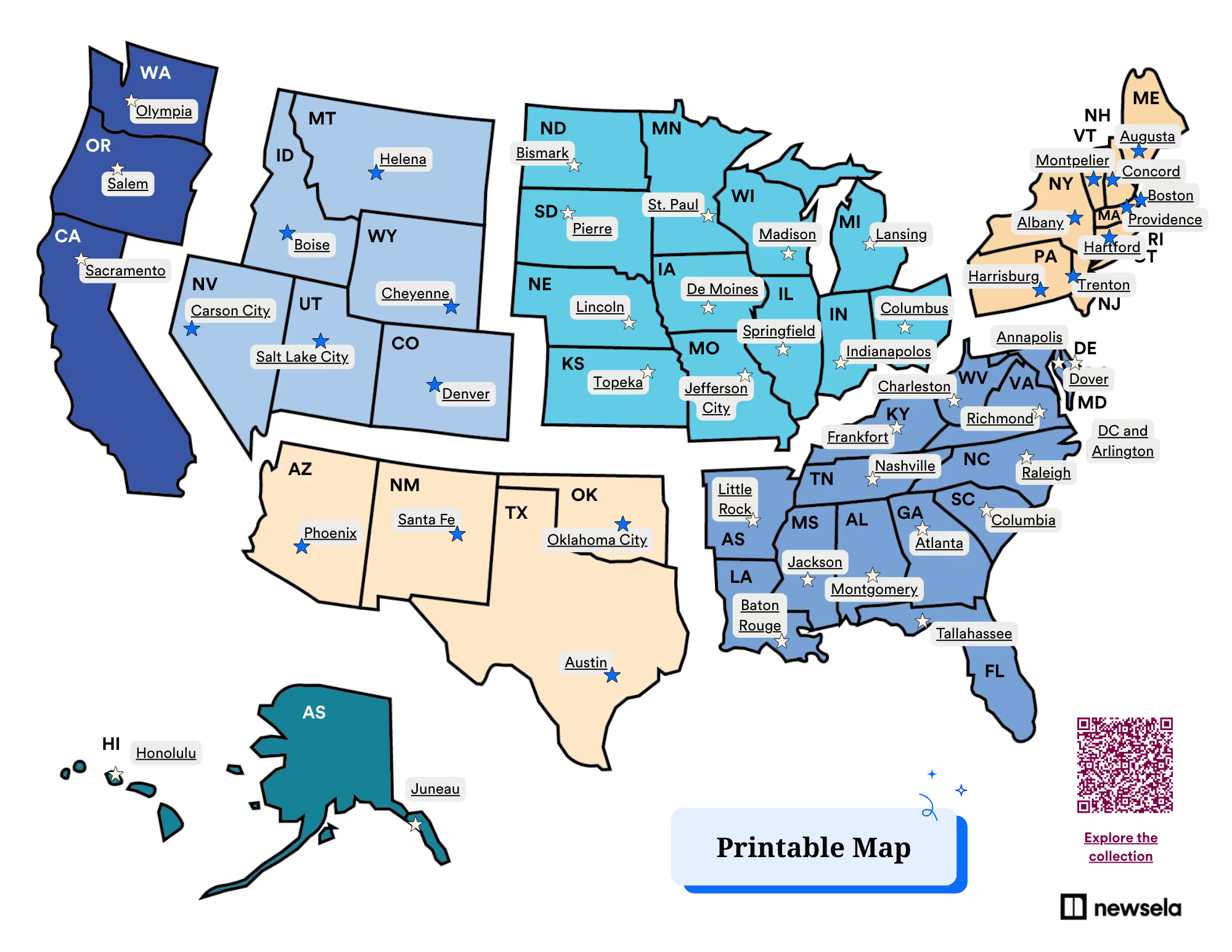
Taking a virtual vacation gives every student access to places they have never visited before. It builds background knowledge, strengthens geography skills, and keeps summer learning engaging without needing a field trip budget.
Students can choose to visit any of the 50 state capitals or Washington, D.C. To guide the experience, we’ve included tools like:
You can extend the activity based on student access, too. Encourage traveling students to visit the mapped locations and make real-world connections. At-home students can use the search feature on Newsela to research more locations and topics in their capital and build their own trip itinerary.
Wrap up with a narrative assignment on Newsela Writing and ask them to answer the prompt: “What is something you learned during your vacation (virtual or IRL) this summer, and what did it teach you about the history and culture of the United States?”
Key takeaways:
STEM activities are a natural fit for summer learning. Students are already exploring, noticing, and asking questions. When you put together a STEM project, you’re just giving that curiosity a little structure.
Short challenges, quick investigations, and real-world questions can help students stay engaged in a fun, meaningful way.
A 30-day science challenge keeps students engaged by building a simple habit: Notice, test, reflect. It’s low-pressure, but consistent, which is exactly what you want during summer learning.
As they progress through the challenge, students will find prompts like:
These prompts build observation, experimentation, and problem-solving skills while building simple, consistent habits.

Virtual field trips give students access to places they can’t visit easily. They’re perfect for slower summer days when you need something engaging but low-prep.
Pick a location and a purpose, then let students explore and share what they learned. You can choose from locations like:
You don’t need a lab to teach science in the summer. Everyday questions get students thinking, noticing patterns, and asking “why,” which is at the core of scientific thinking.
Use quick questions as warm-ups or short investigations. Let students share ideas first, then dig into explanations using texts or discussions. You can try investigating questions like:
These questions work because they feel relevant. Students start to see science in their daily lives, which keeps summer learning engaging without extra materials or prep.
Seasonal STEM activities are a great excuse to build, test, and create. These projects let students focus on the process rather than on getting a perfect result. Plus, you can bring in holiday and seasonal connections with activities like:
Science reviews work better in the summer when they feel like a discovery. Instead of reteaching concepts using a skill-and-drill approach, focus on short activities that revisit key ideas through new ones.
Use quick reads, small tasks, or short discussions to cover areas of:
Want help creating take-home packets for your incoming or outgoing students before they leave for summer break? Need quick lessons to add to your summer school plans? Check out Newsela’s Summer Learning Kit.
It includes many of these, along with other interesting ELA, social studies, STEM, and writing activities, to keep students engaged and learning over the next few months. You can also access teacher resources to help you share this information with your students, and explainers for parents and caregivers to help them support their students’ learning growth this summer.
Plus, if you’re looking for ways to reduce screen time at home or in summer school, our printable packets include worksheets and activities—separated by grade band—for your students to do IRL rather than on screens.


Discover summer reading recommendations for elementary, middle, and high school students and resources to help make the themes of the stories come alive.

Keep students engaged after testing with unplugged learning kits for ELA, social studies, and STEM. Print, teach, and finish strong.

Newsela’s personalized approach to reading and writing provides students the opportunity to keep learning year-round. Enjoy 3 tips for a successful summer!