Products

 Products Overview
Newsela products are purpose-built to unlock student motivation, inspire teachers, and drive long-lasting learning outcomes.









Resources
About
Products OverviewNewsela products are purpose-built to unlock student motivation, inspire teachers, and drive long-lasting learning outcomes.

If you have hockey fans in your classroom, they’ll have a lot to say about the Stanley Cup Finals. Use their excitement for who will hoist the Stanley Cup to build momentum and meaningful learning in the last few months of the school year.
These Stanley Cup Finals lessons help you build background knowledge, spark debate, and connect ELA and STEM to real-world hockey moments your students already care about.
Jump to:
Key takeaways:
You don’t need to be a hockey expert to teach about the Stanley Cup Finals, especially if your students are already into it. They have their opinions about sports, competition, and fairness, and you can channel that into structured reading, writing, and discussion.
These ELA lessons help you connect the Stanley Cup Finals to skills you already teach, like argument writing, analyzing perspectives, and interpreting text and visuals.
Competition is a topic students already care about. The Stanley Cup Finals make it easy to tap into strong opinions about winning, teamwork, and pressure.
Frame the debate around a simple question: “Is competition always a good thing?” Then, give students evidence they can actually use. You’ll get stronger claims, better discussions, and way more engagement. To build that foundation, use resources on topics like:

More women are joining the National Hockey League (NHL) as coaches, executives, and leaders. This shift gives you a relevant angle for classroom discussion around representation and opportunity in sports.
Use this topic to encourage students to consider not just who plays the game, but also who influences it. This builds perspective-taking and helps students connect sports to larger social change. You can do that with articles on topics like how:
Hockey, like many other sports, promotes full-contact play. But is this good for the athletes’ bodies? Considering these ideas makes students dig into real questions about safety, rules, and the risks of being an athlete.
You can guide this research into a structured argument with questions like “Where should the line be between competition and safety?” Students will need evidence, not just opinions, to defend their stand. You can provide that with resources like:
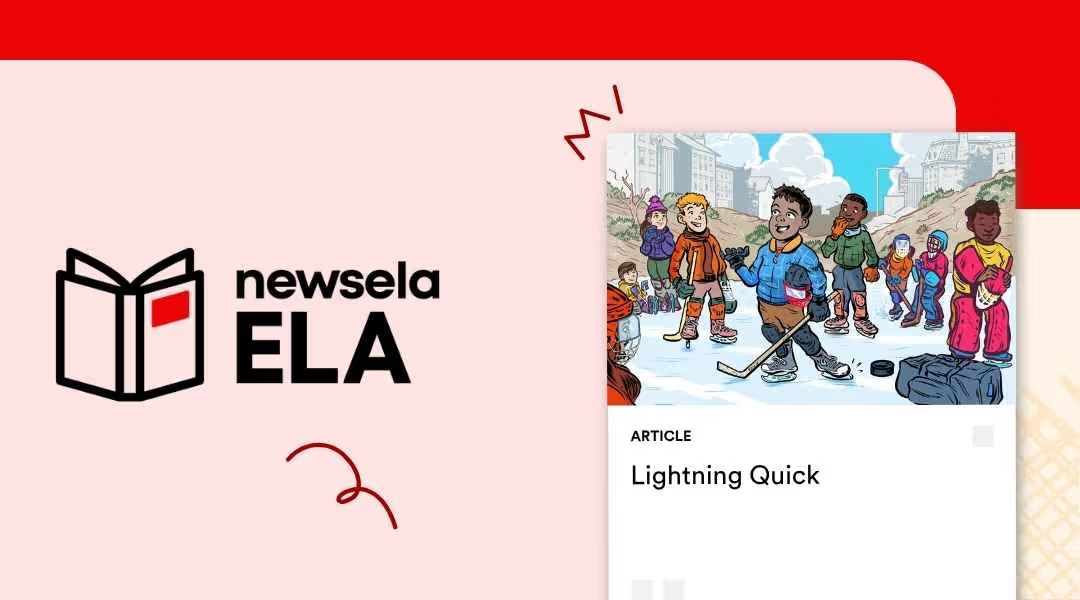
In hockey, reactions happen quickly. Whether players are frustrated, excited, or confident, their emotions will show on their faces and in their play. You can use this information to build a lesson on citing evidence in text and images.
Have students focus on how facial expressions and body language add meaning that the text doesn’t say directly. This builds stranger inference skills and helps them explain their thinking more clearly in writing.
To guide that work, use this structured lesson:
Key takeaways:
You already teach the science concepts that show up in hockey, but do your students know that? When they see how science impacts real games, they pay attention and ask better questions.
These STEM lessons connect directly to what happens on the ice during the Stanley Cup finals. That helps make your existing lessons more relevant and easier to understand.
Warmer temperatures make it harder to maintain high-quality ice during the Stanley Cup Finals in the late spring and summer. But what about in parts of the country that are warm year-round? Or when there’s an unseasonably warm winter?
To answer these questions and build understanding, you can use the following lesson sequence:
Adapt this activity for an elementary audience with our “Science of Hockey” text set. Same great concepts, and even better scaffolded lessons for grades K-5.

Temperature, surface type, and even added substances all affect how ice forms and melts. These factors all come into play during the Stanley Cup Finals. To tie hockey to a core science concept you already teach, use resources on topics like:
Every check, pass, and shot in the Stanley Cup Finals comes down to motion. Momentum explains why bigger, faster players hit harder, and why stopping or changing direction takes force.
This is a logical way to teach physics without abstract examples. Students can picture it instantly because they’ve seen it happen in the game. To keep building understanding, use resources like:
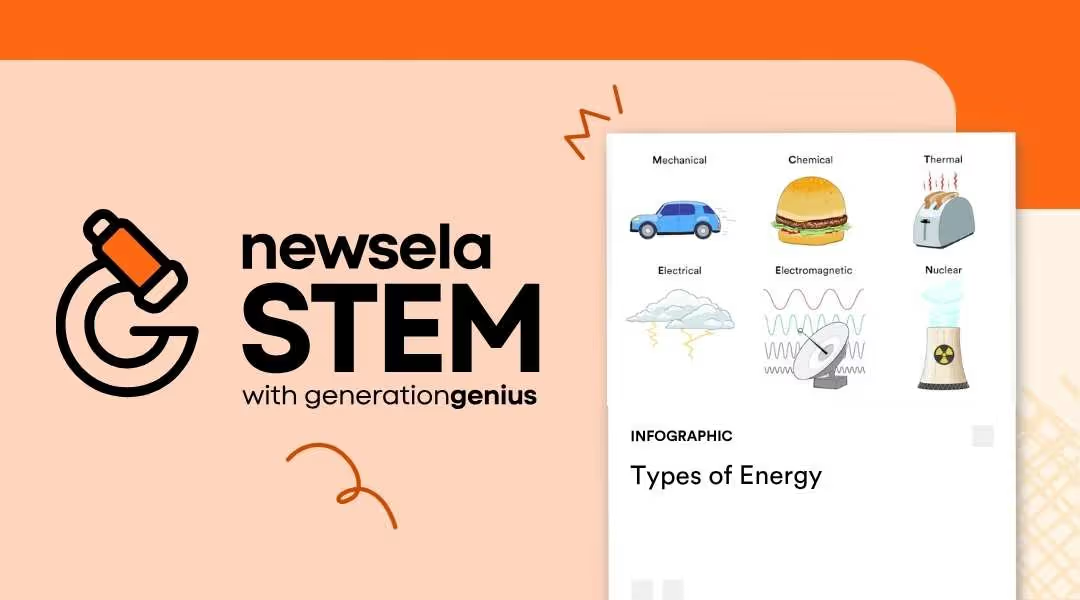
Energy is constantly moving during a hockey game. Skating, shooting, and hits all involve energy changing forms. When students already have an idea of what the concept looks like in practice, it’ll be easier for them to explain movement using the right terms.
To build their understanding, use resources like:
Videos can help students visualize complex concepts related to the math and science of the Stanley Cup Finals. Using Newsela STEM with Generation Genius science videos lets you reinforce science and math standards while making topics like physics, chemical changes, and probability easier to understand.
Each video lesson also includes a 5E lesson plan, key vocabulary, and discussion questions, which help reduce prep time when planning Stanley Cup Finals lessons. Try videos like these to reinforce physics, probability, and other STEM skills:
K-2 Science
K-2 Math
3-5 Science
3-5 Math
6-8 Science
6-8 Math
With a teammate like Newsela, you’ll always have access to a hat trick of high-interest content, engaging activities, and relevant assessment materials to create top-quality lessons for your students. You get the content, scaffolds, and assessments to make it all work, without extra prep.
Not a Newsela customer yet? When you create an account, you can claim your free 45-day trial to access Newsela ELA, Newsela Social Studies, and Newsela STEM and start building Stanley Cup Finals lessons your students will actually care about.


Explore science, ELA, and social studies activities that will get your students excited about learning while tapping into their interest in the Super Bowl.

Use basketball articles for students to teach ELA, STEM, and social studies with engaging NBA content and real-world learning.

Bring the World Series into class with baseball activities for ELA, social studies, STEM, and math.