Products

 Products Overview
Newsela products are purpose-built to unlock student motivation, inspire teachers, and drive long-lasting learning outcomes.







Resources
About
Products OverviewNewsela products are purpose-built to unlock student motivation, inspire teachers, and drive long-lasting learning outcomes.
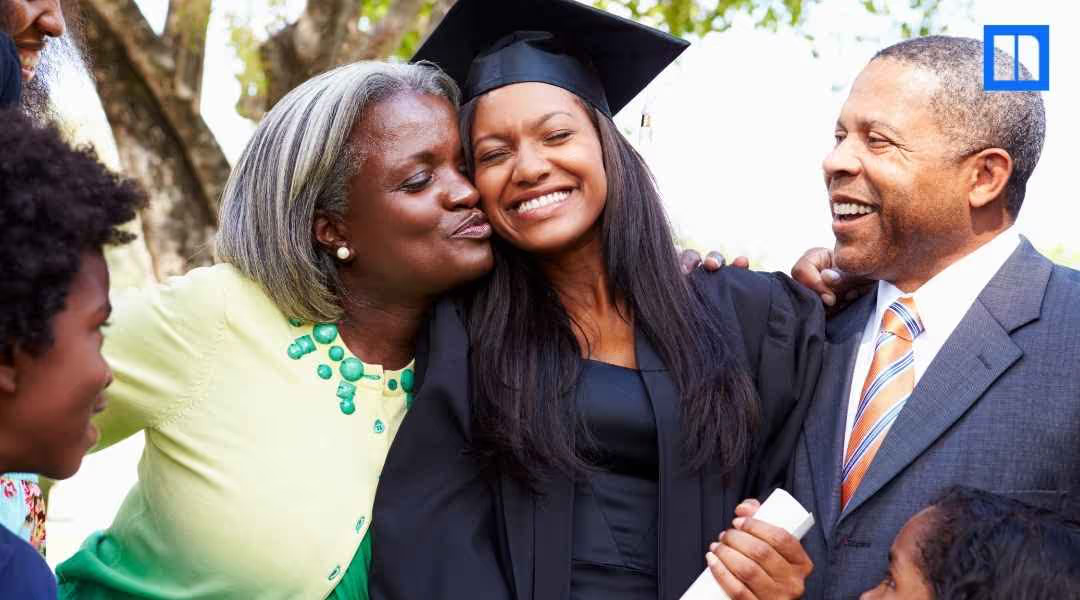
Graduation season is coming up, and your students are thinking about what comes next. Some are ready, others aren’t. But either way, you can use graduation activities to help them reflect, plan, and feel more confident walking out your door.
These ideas connect the dots across students’ years of education and focus on real decisions like college, careers, and life after high school (or middle school, if your students are aging up).
Jump to:
Key takeaways:
You’re already teaching writing and analysis in your ELA classes, and by this time of year, seniors especially may have already checked out. Give them an assignment with a purpose that connects to those last ELA goals you need to hit.
Students can see what strong, purposeful writing actually looks like by reviewing real graduation speeches. These addresses show them how to balance storytelling, advice, and emotion, which can be hard to do when writing.
They’ll also hear authentic voices and get to connect the emotion to the person behind the words. To build that understanding, use speeches from people like:

Give students a clear structure and strong mentor texts so they’re not staring at a blank page when they write. Most will do better when they can see how real speeches are built before writing their own.
Focus on purpose first. Ask students what message they want to leave their classmates with, then layer in how to add structure and voice. To guide that work, use a step-by-step lesson approach:
Getting ready to graduate makes the next step in life feel real. Instead of hearing vague advice, students can get practical information they’ll actually use when they study college and career readiness content.
To ground learning in real situations, bring in articles on topics like:
Even with graduation approaching, students still need time to figure things out. A quick, structured research project gives them space to explore options without pressure. Plus, it ties directly to reading and writing skills you’re already teaching.
To support that work, use resources that guide students to explore:
Sharing career clusters with students gives them a starting point when thinking about what they want to do when they grow up. Instead of guessing, they can group careers by interest and skills, then narrow down options that actually fit them.
To guide that exploration, use a career cluster research project where students read about different clusters and then evaluate how their interests, strengths, and goals align with fields like:
Key takeaways:
Students may think they know how the world will work after high school, but it can still be a shock after graduation. Social studies activities are a way to break down the systems, access, equity, and real-life pathways ahead.

Most students don’t actually know how the higher education system works. They hear about college, but not how admissions, costs, and access can really play out.
Focus on what impacts them directly and what they should expect if they plan to further their education after high school. To build that understanding, use resources that explore:
Studying Historically Black Colleges and Universities (HBCUs) provides students with a more comprehensive picture of higher education. Many students may only know about their largest state schools or the ones that compete in nationally broadcast sports.
Talking about all types of institutions expands their understanding of history, identity, and opportunity. It also helps them see how their college choice connects to culture, support systems, and long-term success. To build that perspective, use resources like:
Not every student wants to attend a four-year college or pursue further in-classroom education right away. Some would prefer hands-on training, shorter programs, or going straight into work. Students need to know these options are real, respected, and available if they want them.
To make those options clear, use resources that explore:
Show students that social studies isn’t just a school subject, but a career path. Many don’t realize that if they’re interested in history, they can turn that into a real job. To make that connection clear, use resources that explore:
Some students love solving real-world problems but don’t see where that fits into a career path. Jobs in planning, policy, and data give them a way to use those skills in meaningful ways. To show what that looks like day to day, use resources that explore the jobs of:
Some students don’t want to take a traditional career path. They want to build something of their own. It’s possible, and you can show them what it actually looks like. To ground entrepreneurship in real examples, use resources that explore real-life success stories, like:
Graduation isn’t just for high school seniors. Middle school students are already on the path (and may have graduation ceremonies of their own before moving up). Giving them a clear idea of high school expectations helps them make better choices when they get there.
To build that background knowledge, use resources that explain:
Key takeaways:
Some students already love STEM, and others haven’t seen how it connects to real careers yet. You can make that concept clearer with a few focused graduation activities to help students see what’s possible.
Most students think STEM careers mean lab work, but that’s only part of it. There are hands-on, health, fitness, and tech-focused roles that connect to different interests and strengths. To broaden that view, use resources that highlight careers like:
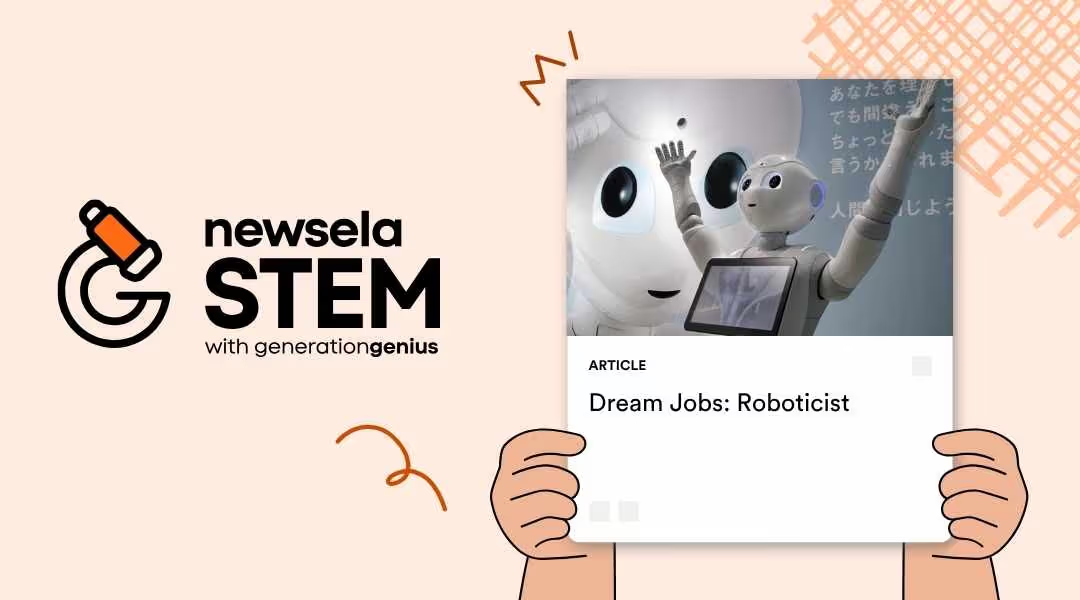
Many students use technology every day, but don’t know who builds it or how it's made. This is where you can connect things they already know—like apps, games, and devices—to real jobs. To build that connection, use resources that explore careers like:
Videos can help students learn more about what it takes to be a scientist who’s out in the field making a difference. Using Newsela STEM with Generation Genius science videos lets you reinforce science standards while making topics like science career exploration easier to understand.
Each video lesson also includes a 5E lesson plan, key vocabulary, and discussion questions, which help reduce prep time when planning graduation activities. Try videos like these to reinforce the topic of career exploration:
K-2 Science
3-5 Science
6-8 Science
Graduation activities don’t have to be just fluff you tack on at the end of the year to kill time. They can help students reflect, build real skills, and make decisions about what comes next.
With the right mix of ELA, social studies, and STEM resources, you can help students feel more prepared and more confident about what’s ahead.
If you want ready-to-use content that builds background knowledge and keeps students engaged, Newsela makes it easy to bring these graduation activities to your classroom. Sign up for a free 45-day trial and start exploring all Newsela has to offer!


Keep students engaged after testing with unplugged learning kits for ELA, social studies, and STEM. Print, teach, and finish strong.

Newsela’s personalized approach to reading and writing provides students the opportunity to keep learning year-round. Enjoy 3 tips for a successful summer!

Discover summer reading recommendations for elementary, middle, and high school students and resources to help make the themes of the stories come alive.