Products

 Products Overview
Newsela products are purpose-built to unlock student motivation, inspire teachers, and drive long-lasting learning outcomes.









Resources
About
Products OverviewNewsela products are purpose-built to unlock student motivation, inspire teachers, and drive long-lasting learning outcomes.
.avif)
Leveled texts have become a hot topic in conversations about the science of reading and the need for better literacy support. For third-grade readers and above, some question the conventional wisdom of the practice of providing time for striving readers to read simpler texts that they can read independently instead of, or in addition to, grade-level texts.
In this blog, we’ll explore questions you may have about the leveled reading discussion:
The debate dates back over a decade to when the Common Core standards were first introduced in 2010. The Common Core’s approach to reading ran counter to decades of practice in “leveled reading,” providing students with texts at their reading level (regardless of grade level) to ensure students can comprehend the text with minimal frustration.
In contrast, the Common Core standards encouraged students to “read stories and literature, as well as more complex texts that provide facts and background knowledge in areas such as science and social studies. Students will be challenged and asked questions that push them to refer back to what they’ve read. This stresses critical thinking, problem-solving, and analytical skills that are required for success in college, career, and life.”
The widespread adoption of Common Core standards by 41 states meant a significant shift to having students read more complex texts, regardless of students’ reading ability level. As research into the impact of reading instruction strategies on literacy has continued, the debate on when and how to provide various levels of texts to students has progressed across districts, policymakers, and educational experts.
On one hand, giving readers simpler texts can help reduce frustration and allow students to practice reading strategies independently, learn content from the texts they read, and develop reading motivation and engagement.
However, others have argued that much of students' reading time in classrooms should be spent in grade-level texts, read with scaffolding and support from teachers. This approach, they argue, provides students with the best opportunity to meet grade-level expectations for reading skill and content knowledge.
Based on the research and conversations led by experts like Tim Shanahan, we think there’s a more nuanced conversation to be had on this topic.
Teachers can differentiate by making informed decisions about which text complexity levels to assign in different classroom scenarios. Reading texts of appropriate complexity enables students to access grade-level curriculum and make progress in reading. But there’s a key nuance to note here…
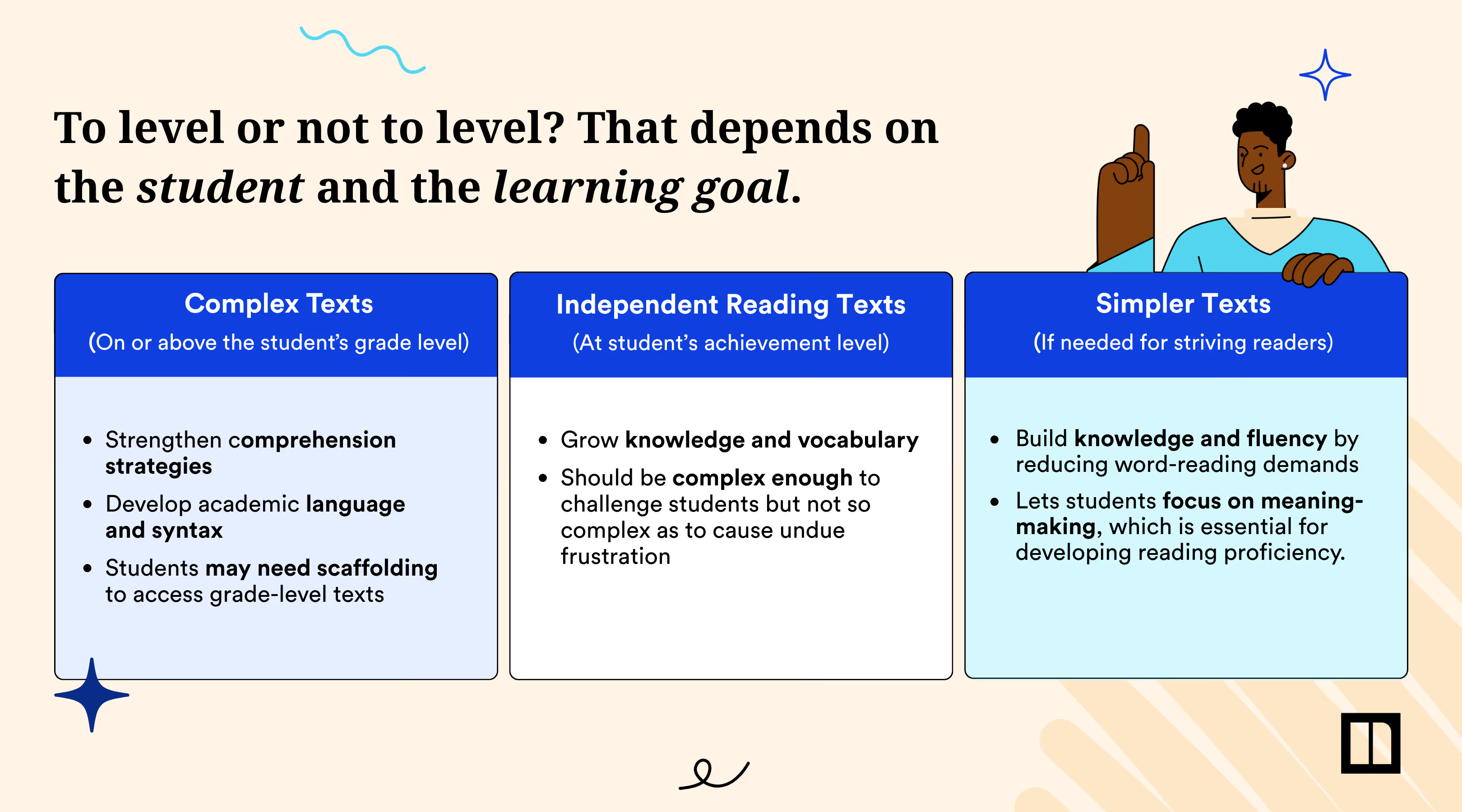
What constitutes appropriate complexity depends on the student and the learning goal.
Research recommends providing students with texts across a range of difficulty levels, depending on instructional goals:
To paint the picture of what this might look like in practice, let’s explore a couple of examples of appropriate text complexities for different classroom scenarios.
In some cases, teachers may allow students to pick texts that interest them for independent reading. Leveled texts are great in this scenario. Texts that match students’ current reading abilities and can be read accurately and independently give extra fluency practice and facilitate general knowledge acquisition, self-efficacy, and engagement.
While reading independently enhances fluency, comprehension, motivation, and learning from text, it does little to provide students with access to complex texts and can often lead to students reading below grade level or not stretching their abilities.
Yet, the majority of ELA instruction happens in whole-class or small-group settings, where teaching more complex reading skills and building comprehension is the goal. In these situations, challenging texts read with teacher or peer guidance enable students to expand their comprehension skills, learn new strategies, and build skills and stamina.
Limiting students to only independent-level texts limits their exposure to complex vocabulary, language, and content that contribute to the development of more sophisticated reading comprehension skills.
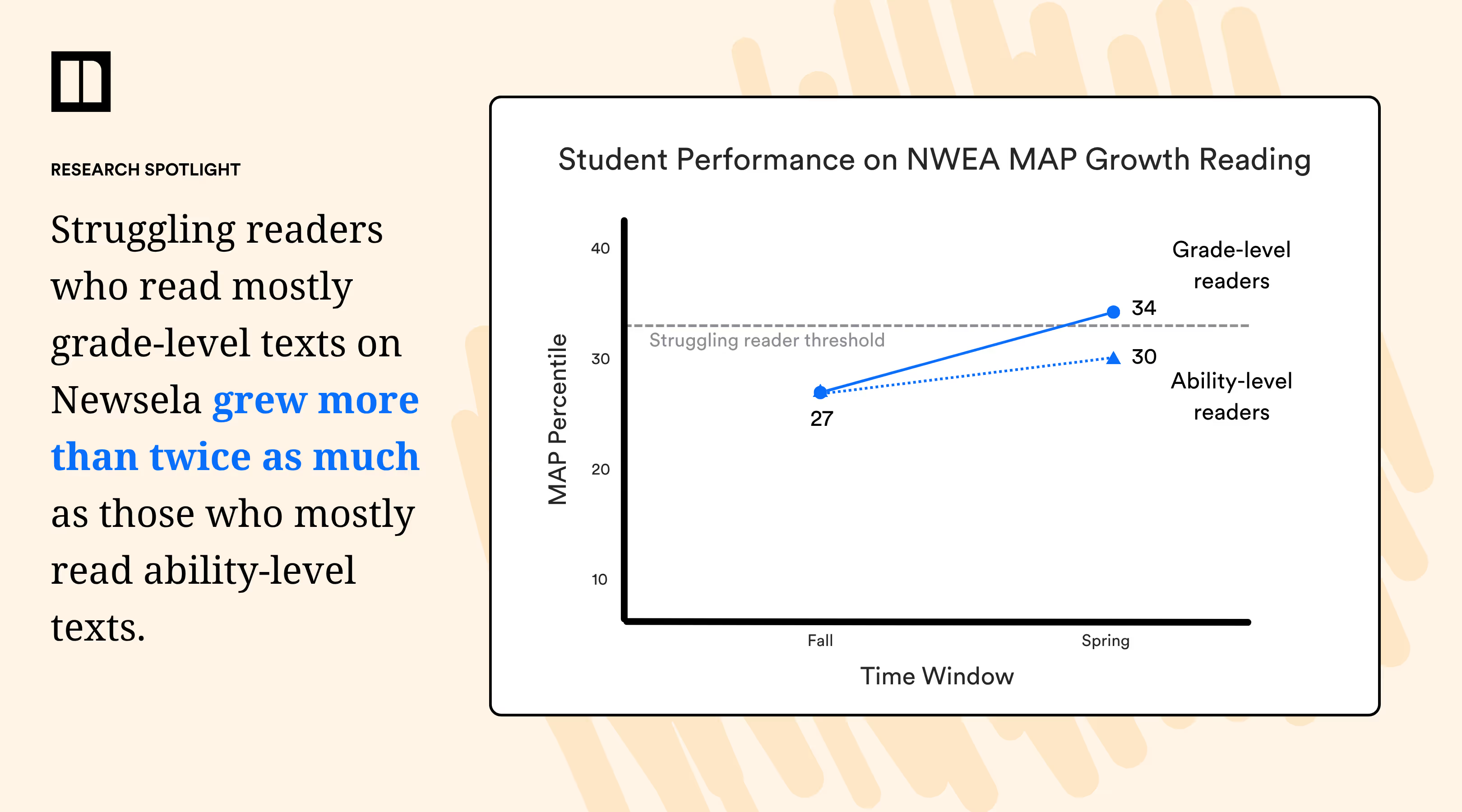
In short, yes! In a series of national studies, the Newsela research team examined whether giving grade-level texts to struggling readers could positively impact their learning outcomes.
The outcome? Struggling readers who read mostly grade-level texts on Newsela grew more than twice as much as those who mostly read ability-level texts. Those students reading mostly grade-level texts showed an average of 8 points of ELA growth between fall and spring NWEA MAP Growth Reading tests, while ability-level readers grew only 0.3 points on average. However, it wasn’t simple exposure to challenging texts that drove this growth.
In a second study to better understand why the grade-level group showed better ELA outcomes, researchers spoke to “grade-level” middle school teachers (who assigned mostly grade-level texts on Newsela) and “ability-level” middle school teachers (who assigned mostly ability-level texts) from four states. All of these educators were dedicated teachers who selected high-interest, relevant texts as part of their curriculum to keep students engaged and foster broad growth.
The researchers found that it takes more than simply assigning grade-level texts to support reading growth. Five key factors distinguished the grade-level teachers from the ability-level teachers:
.avif)
Newsela’s products for ELA, Social Studies, and STEM offer both complex and simplified texts that can be used for independent, small-group, or whole-class reading. All nonfiction content is available at five levels of text complexity, allowing teachers to match texts to students’ needs and instructional goals. Teachers can also select and lock a specific text level for each student, making it easier to increase rigor during teacher-led instruction with grade-level texts.
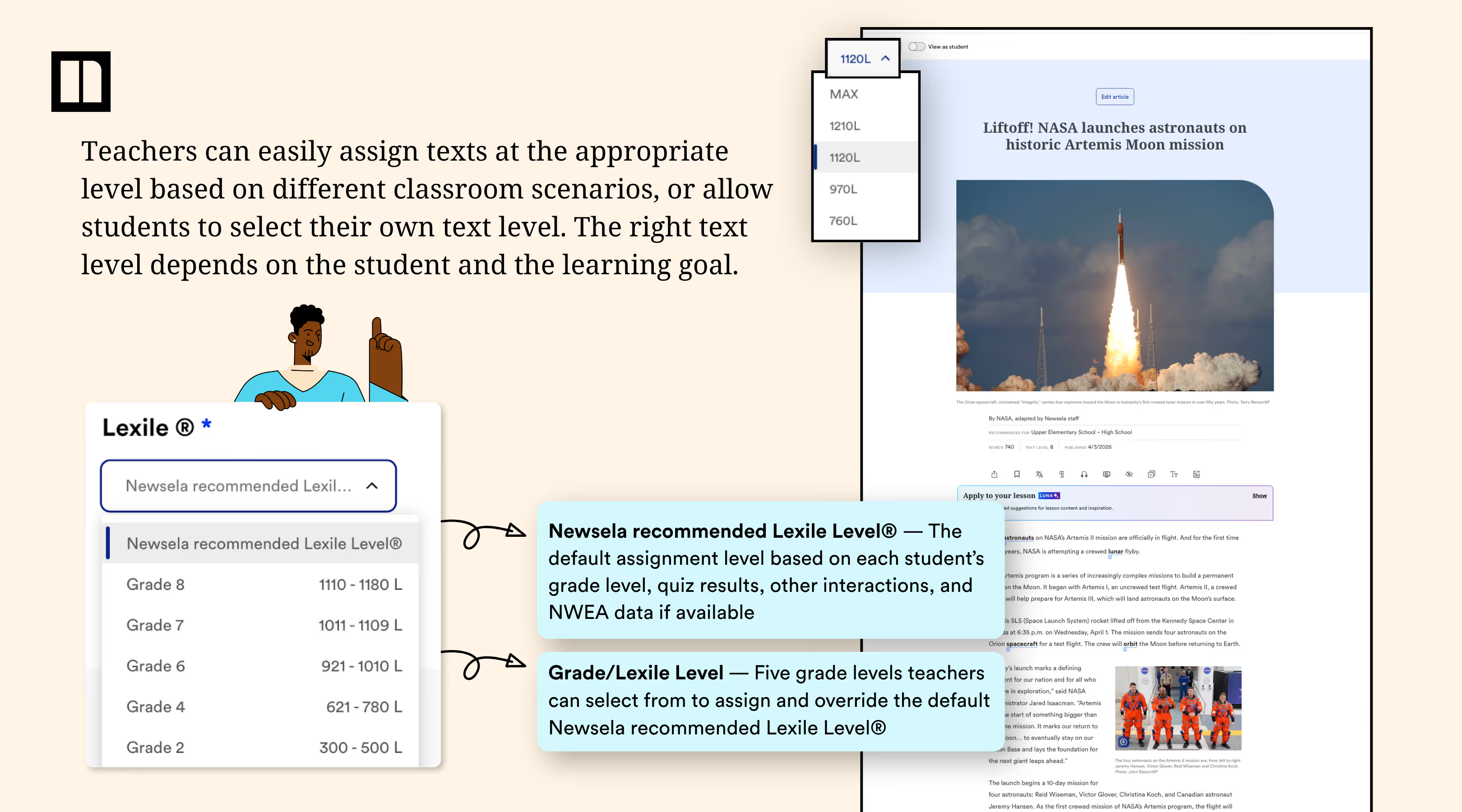
Newsela’s texts also provide scaffolds like Guided Highlighting, Checks for Understanding, Annotations, Listen Mode, and Text Translator tools that enable teachers to easily personalize lessons for individual student needs.
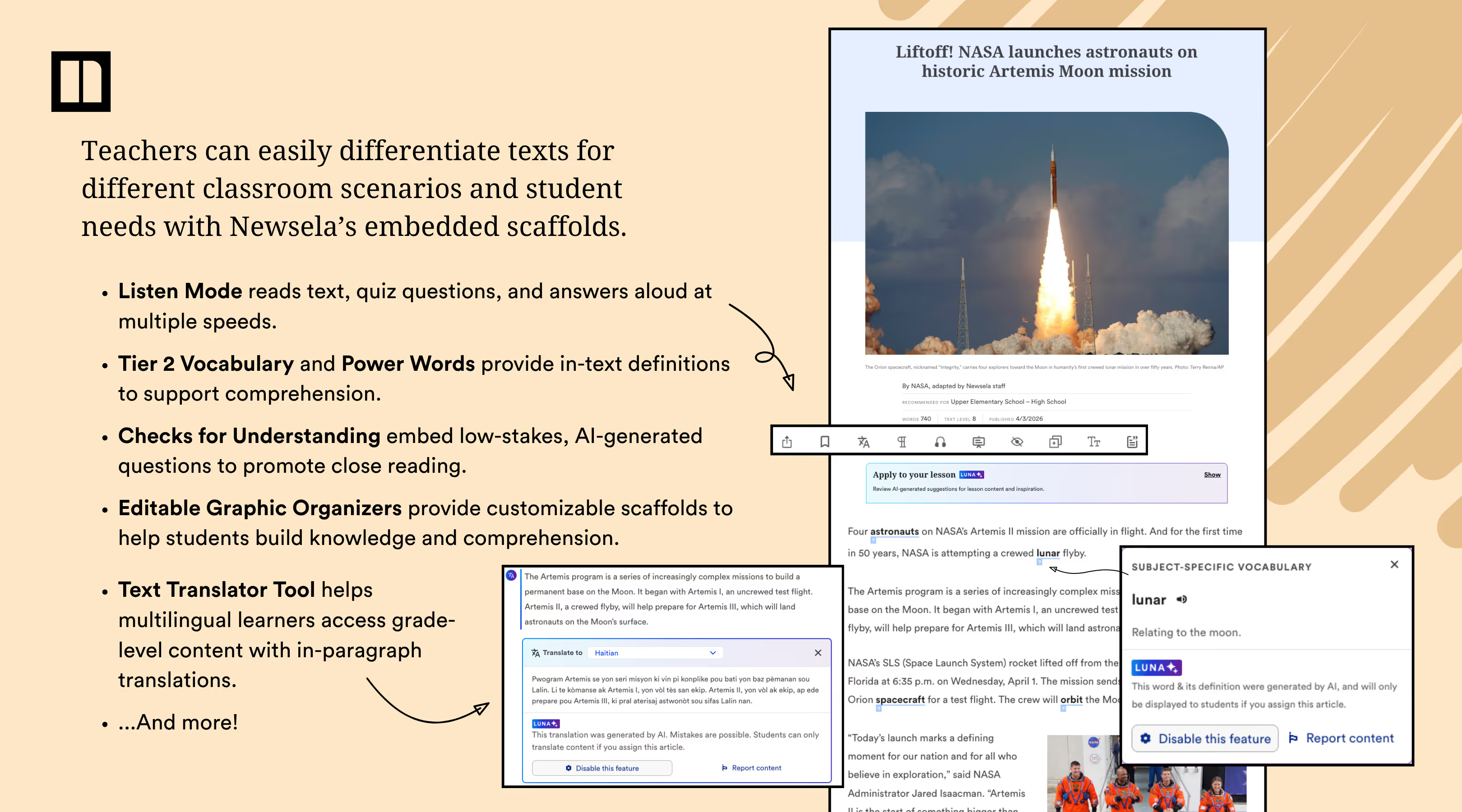
If you’re ready to see how it works, reach out to our team or have your teachers start a free 45-day premium trial to explore Newsela’s flexible literacy resources with their students.

.avif)
Help fill in reading comprehension gaps by practicing with tools like decodable texts for older students to support their reading growth.
.avif)
Explore the foundations of what multimodal learning is, what it looks like in practice, and why it’s important in today’s classrooms.
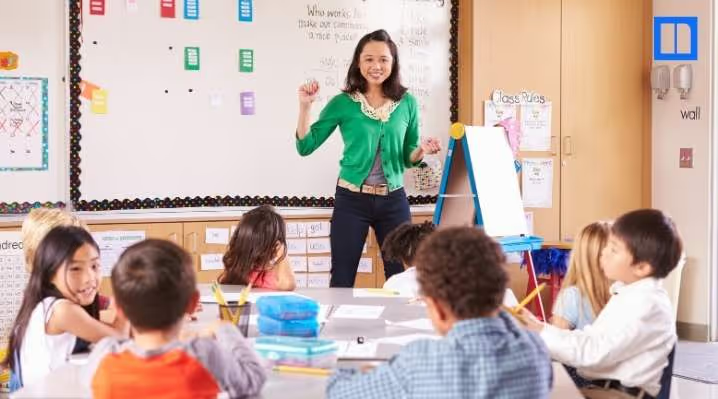
Discover effective elementary reading strategies for K–5. Learn practical ways to build comprehension, vocabulary, and stronger readers in your classroom.