Products

 Products Overview
Newsela products are purpose-built to unlock student motivation, inspire teachers, and drive long-lasting learning outcomes.









Resources
About
Products OverviewNewsela products are purpose-built to unlock student motivation, inspire teachers, and drive long-lasting learning outcomes.
In the public conversation around screen time, many districts are actively working to establish policies and frameworks on what technology students should have access to, when and how that technology is used in the classroom, and what purpose that technology serves.
In my view, the role of administrators is to craft policies—with teacher and student input—that frame these decisions with the right questions and the right data. It’s then up to the teacher whether to use a screen for a given assignment. That decision depends on the learner, the assignment, and the tradeoff—variables that can only be read accurately by someone in the classroom. You can read more about my thoughts on screen time policies here.
In the 2021 second edition of Why Don't Students Like School?, cognitive psychology professor Daniel Willingham offers a question that I think should be at the center of any decision about classroom technology: "When new technology replaces old, something is sacrificed. Am I clear on what that is, and am I comfortable with it?"
Willingham's question is the right one, and it can only be answered by those close to the student. It depends on three dynamic variables that can't be effectively legislated from beyond the classroom:
These can be abstract questions. In this blog, I’ll use a concrete example to illustrate what questions and decisions come up in real classroom scenarios when considering technology use:
Writing is a good example of how research can help us understand effective practices across modalities—what each is good for, why, and for whom.
Consider neurotypical and neurodivergent learners: some may be English speakers, others may be multilingual learners. When teachers decide whether to assign an activity that requires handwriting vs. typing, each student group experiences different tradeoffs related to comprehension, information retention, editing and revising, screen distractions, and teacher insights.
Writing by hand helps students plan and organize long-form (multi-paragraph) writing. It’s also useful for note-taking—whether on research sources or during a lecture.
When we’re trying to encode information for later access and retrieval, the physical act of writing creates a useful friction that aids memory. This labor does more than capture content; it reifies it, creating a mental association with a specific time and physical space. This upfront effort ultimately streamlines information retrieval when it’s needed most.
When we’re at a point where we are ready to revise our writing, however, digital tools offer a more efficient path. Reworking and reordering ideas is simpler with digital copy-pasting than manually rewriting entire paragraphs to adjust the structure.
The lack of friction in typing out our ideas is helpful if we’ve first taken the time to write them out by hand. Research shows that when writing by hand, essay-writing students tend to plan more and write less. When writing digitally, they plan less and write (and revise) more.
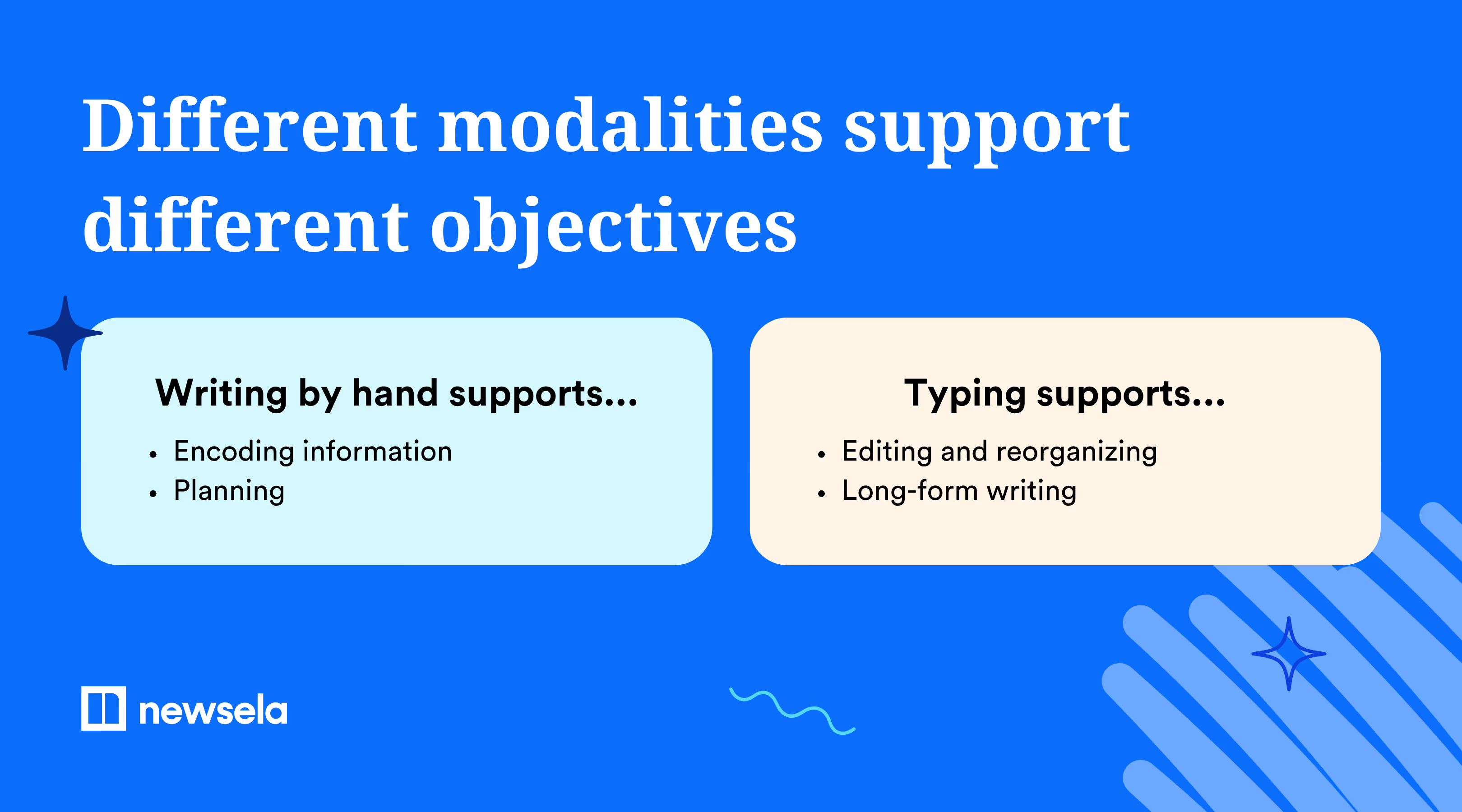
If we want students to take their time to develop ideas thoughtfully and make a plan to write their essay before diving in mid-thought, we should encourage them to start on paper. If we want them to take advantage of feedback (from any source—a peer, their teacher, AI), digital writing will be best for this.
Students who are neurodivergent or for whom handwriting is physically difficult—such as those with dyslexia or dysgraphia—may benefit from the use of a screen-enabled device to capture their ideas through accommodations like speech-to-text. And when they are revising, they will benefit from having their own words read aloud back to them so that they can verify that they did indeed write what they intended to.
Multilingual learners or students reading below grade level also benefit from digital content accommodations, such as key vocabulary callouts. Digital platforms provide critical scaffolds like speech-to-text and translations that are difficult to implement with paper alone.
Rather than an "either/or" debate, the focus should shift to the writing process itself to drive the strongest student outcomes.
Different modalities—print or digital—are often better suited for specific stages of that process. As Chief Academic Officer at Newsela, I spend a lot of time visiting school districts across the U.S. to learn about the challenges they’re facing and the solutions they’re implementing. These visits provide a front-row seat to how technology is actually integrated into daily instruction. Most districts follow one of three paths: entirely paper-based, entirely digital, or a hybrid approach tailored to the writing stage.
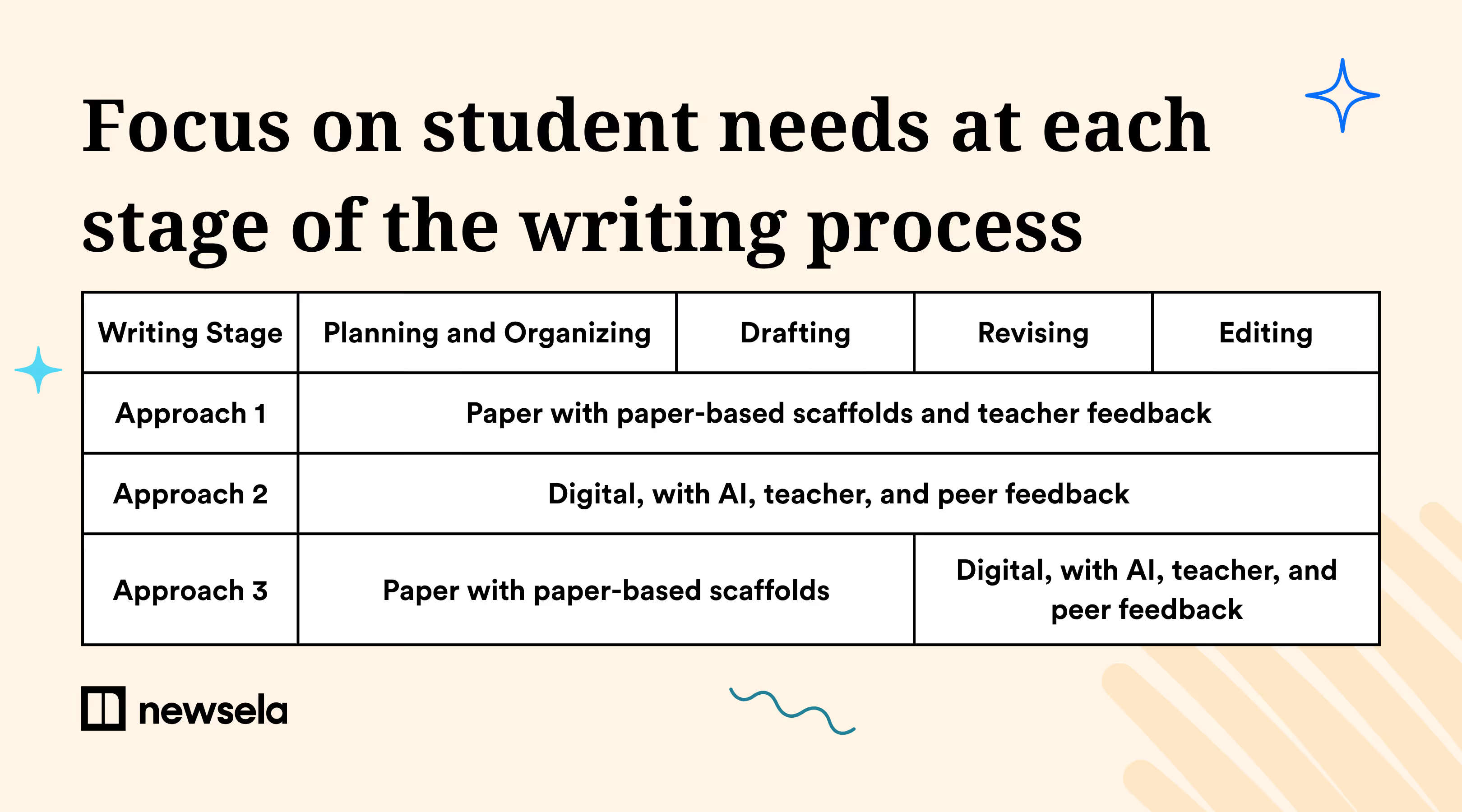
In Approach 3—the one I find the most compelling—districts identify the best fit for each stage of the writing process. However, these approaches always have exceptions; students who struggle with physical writing may benefit from a digital-first path using speech-to-text.
This writing example illustrates that the decision to use a screen must be made on an individual basis, assignment by assignment, to determine if it helps or hinders learning. Think of screen use like a parking meter: some assignments naturally require more time than others. Some students will need digital tools for the entire task, while others may not need them at all. Arbitrary limits—like timers or technology-enforced screen locks—are counterproductive to our shared goal of student achievement.
Every district’s needs are different, as are each student’s needs. When it comes to making a decision about when to use technology in the classroom,
“We've learned a balanced approach [to screen time policies] also entails trusting and giving our teachers professional learning so that they can make great professional decisions versus compliance. When we're saying across the board that all of the students in your class should do times a week, that really takes out [teachers’] professional judgment as well as goes against our purpose and that technology should be intentional.” – Director of Elementary Education, Blue Springs School District (MO)
For an overview on how districts across the U.S. are building their screen time policies—and how those translate to classroom instruction—check out this panel discussion featuring leaders from San Diego USD, DeKalb County Schools, Blue Springs School District, and Lexington Public Schools.
When it comes to the screen time debate, approaches to AI in the classroom are a major component driving questions, practices, and policies. Stay up to date with the latest conversations in education with a podcast from Chief Academic Officer & Co-Founder Dan Cogan-Drew: AI in the Classroom - Daily, also available on Apple Podcasts and Spotify.

.avif)
With cellphone bans and debates about classroom screen time gaining significant momentum, teachers, parents, and education leaders are not just debating tools; they’re rethinking instruction itself. At the center of these conversations is a shared belief: learning must be intentional, effective, and grounded in student needs. At Newsela, that belief is our foundation. Our mission as an education company remains unchanged: Meaningful classroom learning for every student, every day.
.avif)
Newsela’s Chief Academic Officer shares his perspective on the roles district leaders, policy-makers, and teachers should play in the screen time debate.

Keep students engaged after testing with unplugged learning kits for ELA, social studies, and STEM. Print, teach, and finish strong.




.avif)