Products

 Products Overview
Newsela products are purpose-built to unlock student motivation, inspire teachers, and drive long-lasting learning outcomes.







Resources
About
Products OverviewNewsela products are purpose-built to unlock student motivation, inspire teachers, and drive long-lasting learning outcomes.

Lunar and solar eclipses aren’t new phenomena—the first recorded eclipse dates back to ancient times! But these celestial moments are still incredibly powerful to spark student learning. The 2026 eclipse events can give you an opportunity to connect science, literacy, and history through real-world observation and inquiry.
Newsela makes it easy for you to prepare with standards-aligned resources you can use before, during, and after every eclipse event.
Jump to:
Key takeaways:
The 2026 eclipses provide a hook for teaching astronomy concepts like Earth-moon-sun alignment, light, motion, and observation. By grounding instruction in real-world events, you can help students connect abstract science ideas to something they can actually see and experience.
To support your instruction, Newsela STEM has interactive science lessons, videos, and articles that explain eclipse science in clear, student-friendly ways.
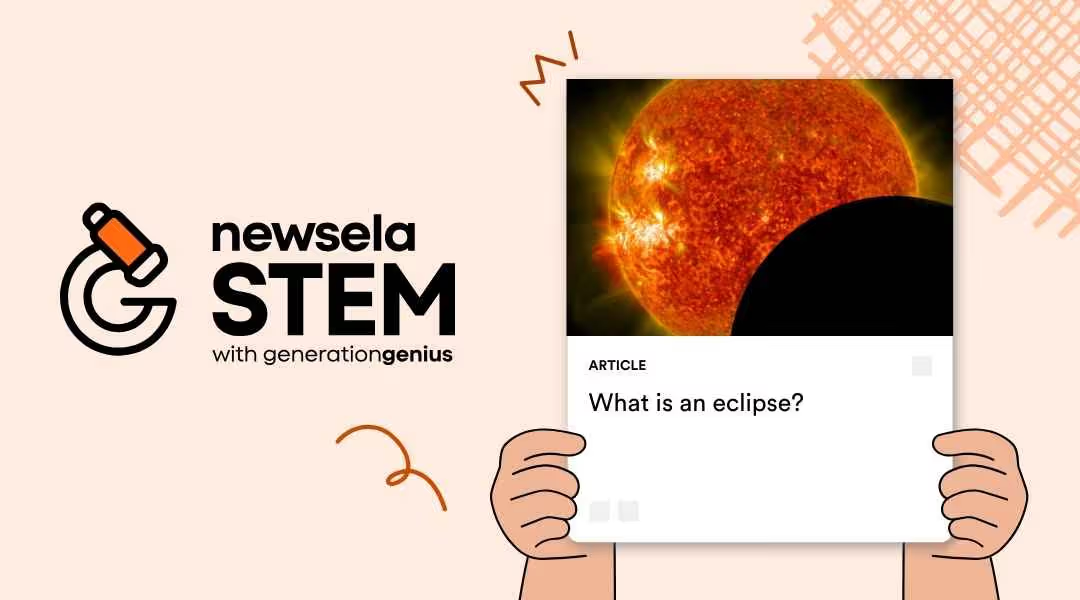
An eclipse happens when one celestial body moves into the shadow of another. To help students understand why eclipses happen and why we can’t see them everywhere, start with clear explanations and visual models.
Newsela STEM supports this learning with resources like:
Not all eclipses are the same. Solar and lunar eclipses can be partial or total, depending on how the Earth, moon, and sun align. Understanding these differences helps students better prepare for what they’ll see during the 2026 eclipses.
Use this Newsela STEM lesson to deepen their understanding:

A “Ring of Fire” eclipse, also known as an annular eclipse, happens when the moon passes in front of the sun but appears smaller. It leaves a bright ring visible around it. This event is a great way to extend eclipse instruction. Teach the phenomenon with:
Eclipses are closely tied to the moon's phases and orbit. Even when there’s no eclipse in the forecast, tracking lunar phases can help students understand why eclipses occur when they do. Support this instruction with:
Before students can fully understand eclipses, they need background knowledge of the Earth’s rotation and its relationship to the sun. Use these Newsela STEM resources to help them better understand these concepts:
.avif)
Eclipse lessons naturally lead students to bigger questions about space. Expanding students' discoveries beyond Earth can help them understand the 2026 eclipses in a broader cosmic context. Explore topics like:
Some eclipse concepts are best learned in multiple modalities. Newsela STEM with Generation Genius videos makes these phenomena easily accessible and engaging across grade bands. Try these video selections:
K-2 Science:
3-5 Science:
6-8 Science:
Key takeaways:
The 2026 eclipses give you a timely opportunity for ELA research projects that combine reading, writing, and inquiry. When students research space topics connected to real events, engagement increases naturally.
Newsela ELA provides ready-to-use text sets and research projects that make cross-curricular planning easier.
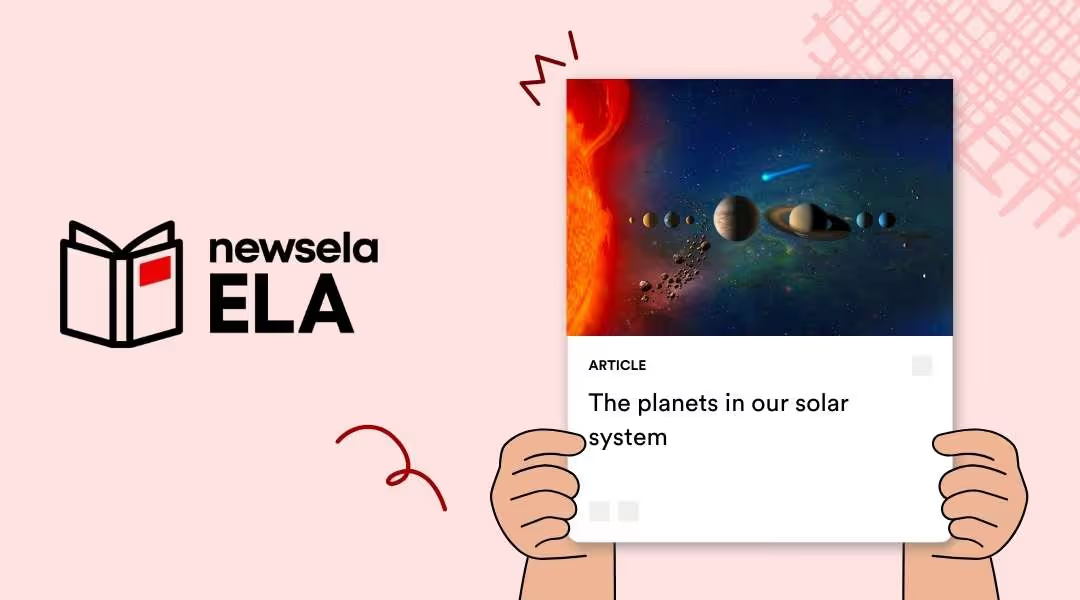
Students can investigate big-picture questions about space using a ready-to-share Newsela ELA research project. This text set guides students to explore:
An eclipse isn’t the only reason to look up. Expand instruction to include other nighttime phenomena to help students stay curious about space beyond eclipse events. Use resources like:
Key takeaways:
Understanding eclipses also means understanding our human relationship with space exploration. The Space Race gives students a critical historical context for why we study the galaxies and planets today.
Newsela Social Studies resources help you connect scientific events, such as the 2026 eclipses, to global history.
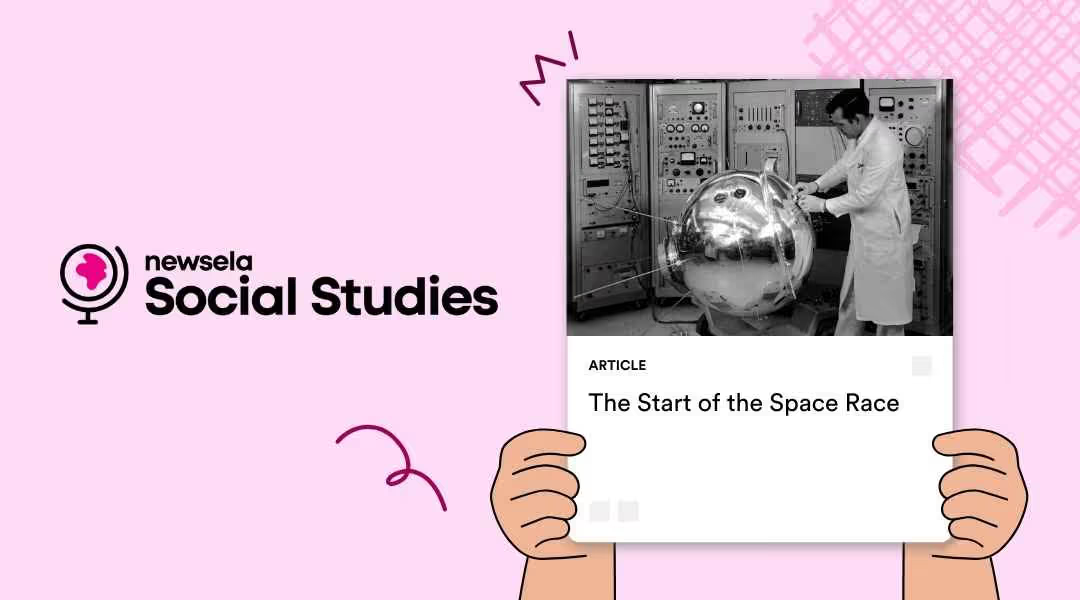
The Space Race began on October 4, 1954, when the Soviet Union launched Sputnik 1, igniting competition with the United States to see who could reach the moon first. This rivalry accelerated scientific discovery and space technology. Teach about this era using:
The 2026 eclipses give you an opportunity to spark curiosity, build scientific understanding, and connect learning across subjects.
With Newsela’s knowledge- and skill-building products, you can create timely, engaging lessons for every eclipse and astronomical event without adding extra prep to your workload.
If you’re not a Newsela customer yet, sign up for Newsela Lite and get a 45-day free trial to access premium, differentiated content that helps you plan for the 2026 eclipse events and beyond!


Find Earth Day lesson plans you can use in science, ELA, and social studies classrooms. Includes activities, debates, and projects for every grade band.

Need World Water Day activities for school? These K–12 ideas help students explore water science, global issues, and conservation across subjects.

Find World Forest Day activities you can use in science, ELA, and social studies to build background knowledge about forests and trees.